
Published on
Sample Preparation of Aluminum and Aluminum Alloys
Aluminum’s physical properties have made it a highly preferred metal for use in aerospace, automotive, and structural applications. Aluminum is commonly alloyed with other elements (i.e. copper, magnesium, silicon, manganese and lithium) to improve physical properties required for specific applications.
Alloying aluminum improves its mechanical properties, but this can also introduce metallurgical and manufacturing challenges. For quality assurance, metallography can be used to assess porosity, grain structure, and more. By analyzing a sample, manufacturers can determine whether the aluminum alloy will meet performance and quality expectations and resolve any issues.
Sample Sectioning: The Critical Cut
Accurate metallographic analysis begins with proper sample preparation. The first and most critical step of the sample preparation process is sectioning. If the sample is improperly sectioned, it could introduce permanent artifacts, including thermal damage and microstructural changes. For aluminum alloys, it is best to section with a blade that is designed for nonferrous materials.
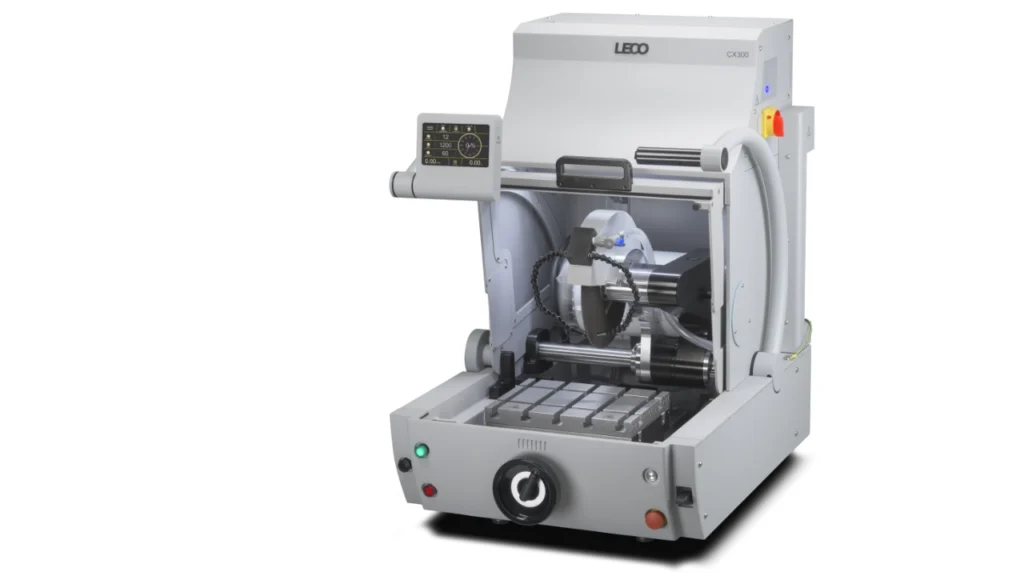
To help with thermal degradation, LECO’s CX Series of sectioning machines are engineered with the ability to program feed rates and have a robust coolant system to provide a constant flow of coolant on the sample and blade during sectioning.
Mounting: Easy and Effective for Aluminum Samples
It is recommended to mount aluminum samples prior to grinding and polishing to protect edges, improve handling, and ensure a flat, uniform surface for accurate microscopic examination. Proper mounting also enables better edge retention and allows preparation of small or irregularly shaped specimens that would otherwise be difficult to process.

For most aluminum-based materials, either hot (compression) or cold (castable) mounting methods can be used; however, the selection should be based on the material’s sensitivity to heat and pressure, as well as the need for edge preservation. Castable mounting media are often preferred for delicate or heat-sensitive samples, while compression mounting is suitable for more robust specimens when comparable abrasion rates between the mount and sample can be maintained to ensure optimal preparation quality.
Whether you decide to hot mount or cold mount your aluminum sample, LECO offers both the instruments and the supplies you’ll need.
Grinding and Polishing: Automation is Key
When grinding and polishing aluminum samples, automation can significantly improve both workflow efficiency and results. Automated systems, such as LECO’s PX series, allow multiple specimens to be processed simultaneously with controlled parameters like pressure, speed, and time, resulting in improved reproducibility, flatter surfaces, and reduced preparation time compared to manual methods.
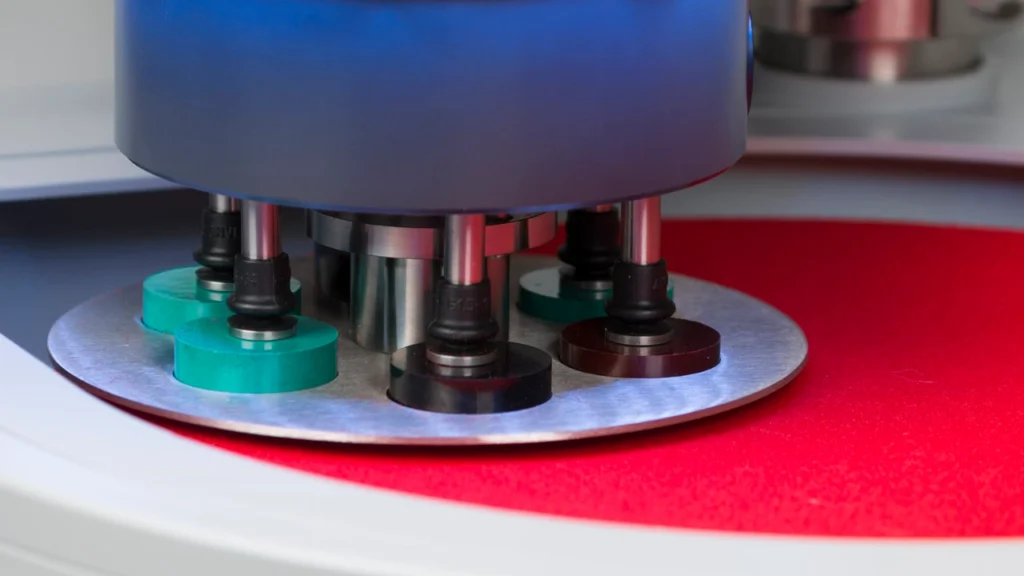
Grinding is a critical step, often representing the majority of the preparation effort, and must be properly executed to minimize deformation and ensure accurate microstructural analysis. Premium-grade silicon carbide papers are recommended for aluminum and most nonferrous alloys due to their effectiveness in producing a suitable surface for polishing, with progressively finer grits used to reduce deformation before polishing.
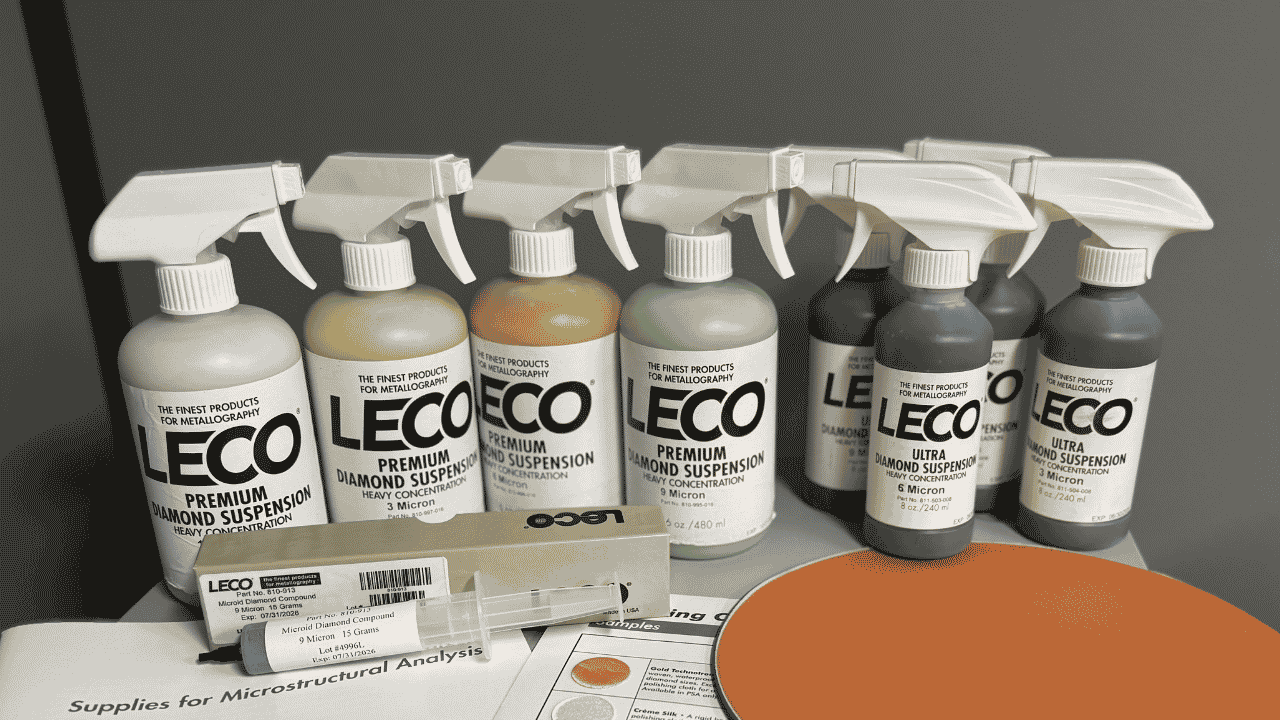
For polishing, a structured, multi-step approach is recommended to systematically remove scratches and surface deformation. Intermediate polishing is commonly performed using diamond abrasives (i.e., 3 µm and 1 µm) on appropriate cloths to ensure efficient material removal and minimal surface damage. LECO’s premium monocrystalline diamond solutions are color-coded for ease of identification, further simplifying aluminum sample preparation.
Intermediate polishing is followed by a final polishing step using submicron abrasives such as 0.05 µm alumina or colloidal silica to produce a deformation-free, mirror-like finish. Colloidal silica is particularly effective as a final polishing medium for aluminum alloys, as its ultra-fine particles and chemical-mechanical action help remove residual deformation and reveal the true microstructure with high clarity when used at low speeds and light pressures.
To further optimize results, fluid extenders or lubricants—such as LECO’s Premium Diamond Suspensions—should be used throughout polishing. These extenders reduce friction, dissipate heat, prevent abrasive clogging, and ensure uniform distribution for a consistent, high-quality surface finish.
Image Analysis: Identify Porosity and Dendrite Arm Spacing
Once sample preparation is complete, LECO provides a fully integrated solution to deliver fast, accurate, and repeatable metallographic analysis. Using LECO’s VX4 and VX5 microscopes, users can immediately evaluate aluminum samples in the as-polished condition to identify key features such as porosity, inclusions, and defects, eliminating unnecessary steps while accelerating throughput. When additional microstructural detail is required, chemical etching or optical techniques can be applied to reveal grain boundaries, dendritic structures, and phase distributions with precision through controlled, selective contrast enhancement.

LECO’s advanced microscopy platforms go beyond basic imaging by offering multiple illumination modes, including brightfield, darkfield, polarized light, and differential interference contrast (DIC). This enables users to differentiate subtle surface features, compositional variations, and topography that are not visible with traditional methods.
These capabilities are further enhanced with the PAXIT image analysis software, which transforms microscopy into a fully quantitative process. Features such as porosity, dendrite arm spacing, and other critical microstructural characteristics can be automatically detected, measured, and reported using grayscale, color, and morphology-based differentiation. This automation significantly improves productivity, reduces operator variability, and ensures repeatable, traceable results across users and laboratories.
A Complete Aluminum Solution
With LECO’s complete workflow for sample preparation to advanced imaging, laboratories benefit from a streamlined process that increases throughput, enhances confidence in results, and reduces total cost per analysis. The result is a scalable metallographic solution designed to help customers move faster, make better decisions, and consistently achieve high-quality outcomes in aluminum analysis and beyond.
For more details and guidance on each step of the workflow, read our application note, “Metallography of Aluminum and Aluminum Alloys”.
To learn more about the metallographic instruments we offer, explore our Metallographic Solutions.
If you’re currently working with aluminum and want to discover how else LECO can work with your lab, you can view our line of Inorganic instrumentation.
Instruments Used
CX300 Series
High-performance benchtop sectioning machine
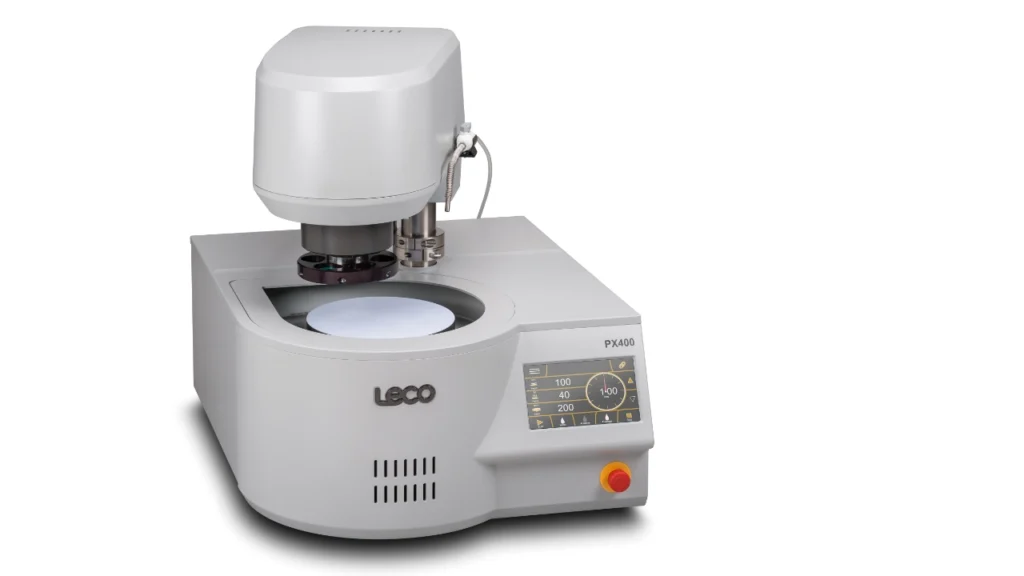
PX Series Grinding and Polishing
Safe and efficient grinding and polishing solution with automation options.

MX Series
Hot Compression Sample Mounting
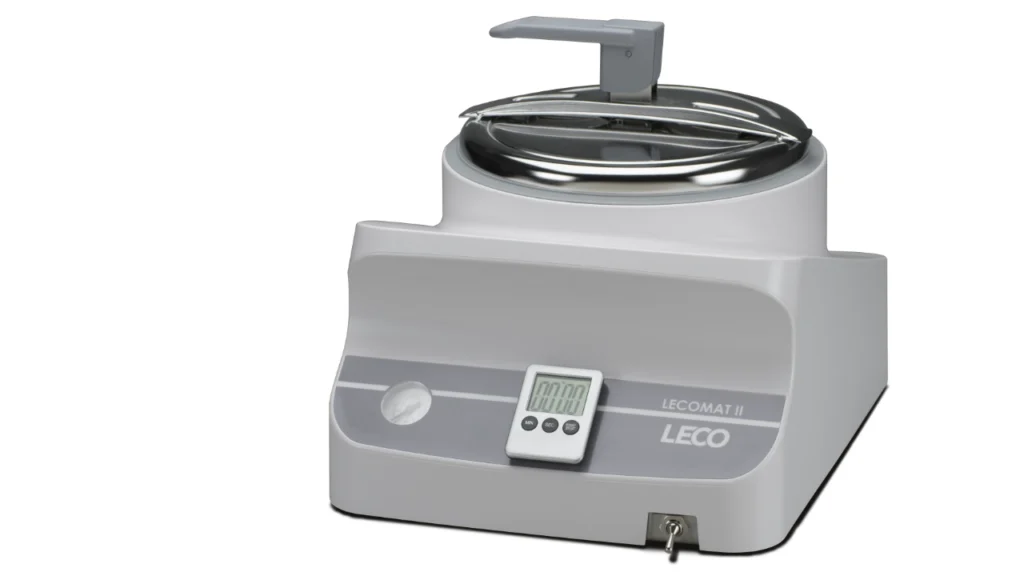
Cold Mounting
Low-effort sample mounting solutions

VX Series Microscopes
Versatile clarity for metallographic and industrial analysis

Image Analysis Tools
Capture and analyze microstructural data

 English
  Spanish
  Japanese
  German
  French
  Portuguese