
Published on
Résoudre le défi de l'analyse des polymères de haute performance avec GCxGC-HRTOFMS
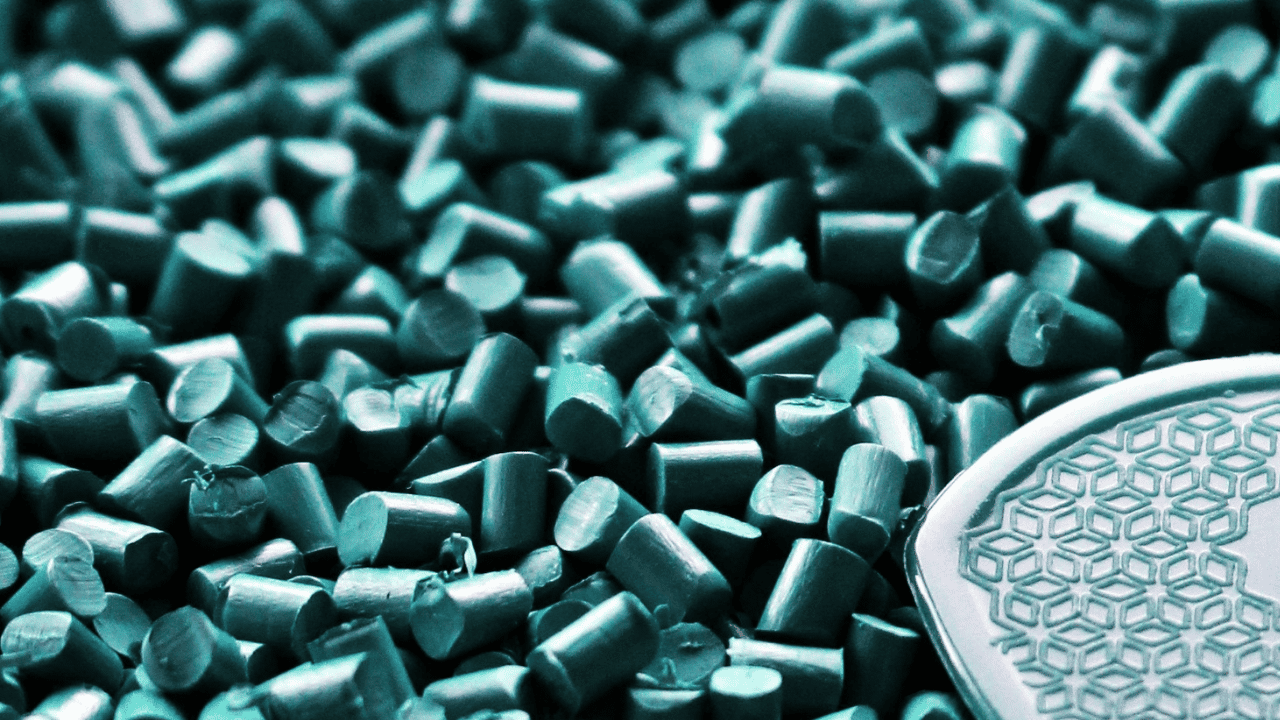
High-performance polymers provide unparalleled chemical and thermal resistance, making them ideal for a wide variety of challenging applications in the fields of aerospace and semiconductor fabrication. This resilience poses a challenge for analytical research, further complicated by a significant variety of formulations, including a wide range of additives.
Recently, the chemists at LECO took on the challenge of characterizing the chemical makeup of a high-performance polymer known as polyphenylene sulfide, or PPS. PPS is a thermoplastic with a semi-crystalline structure, engineered for high heat and chemical resistance.
For this analyses, two complementary analytical techniques were used to unravel this complex and challenging sample: thermal desorption and pyrolysis.
Thermal Desorption and Pyrolysis
Thermal desorption involves controlled heating of a sample up to 300 degrees Celsius, allowing for the gradual volatilization of key analytes within the sample, ideally without damaging their chemical structure.
Pyrolysis uses much more intense heat, ranging from 600 degrees Celsius and beyond. Rather than focusing on the preservation of volatiles, pyrolysis allows for the analysis of less volatile polymers by splitting these long chains into more easily analyzed segments.
Complementary Analytical Techniques
By performing both methods, the full chemical composition can be revealed: additives and contaminants through thermal desorption, and base polymer structure via pyrolysis. Using only one of the methods would result in an incomplete picture of the polymer, making the analysis much less valuable and leaving gaps in the results.
This two-pronged analytical approach allows for a more complete analysis of complex and challenging polymers without the significant sample prep time of alternative methods such as dissolution or derivatization. With thermal desorption and pyrolysis, you get the output you need, minus the long wait.
Why 1D-GC Isn’t Enough
While thermal desorption and pyrolysis made it possible to analyze the PPS using gas chromatography, analysis of this high-performance polymer necessitates the utilization of equally high-performance analytical instrumentation in order to achieve thorough, trustworthy insights. LECO chemists ran the sample using both GC-TOFMS (gas chromatography time-of-flight mass spectrometry) and GCxGC-HRTOFMS (two-dimensional gas chromatography with high-resolution time-of-flight mass spectrometry), and the differences were noteworthy.
Multidimensional chromatography resulted in excellent separation of coeluting compounds from the first-dimension separation. The Pegasus HRT+4D produced cleaner spectra and delivered more compound annotations when compared to 1D GC-HRMS analysis.
The Importance of Confident Results
Analysis of high-performance polymers is critical to ensure product quality and safety. Since polymers are often used in environments where performance isn’t just expected, but mission-critical, it’s imperative that they perform as intended. Beyond quality control, effective analysis of these polymers allows for the optimization of current industrial processes, as well as the development of better high-performance polymers and manufacturing processes.
Solve your Polymer Challenges
For a closer look at the research and a more detailed description of the process, watch our webinar on characterizing high-performance polymers using thermal desorption and pyrolysis coupled with high-resolutions mass spectrometry.
Caractérisation de Polymères par Désorption/Pyrolyse Thermique TOFMS Haute Résolution
Découvrez comment la GC-MS haute résolution offre des informations chimiques précises pour les flux de travail avancés de caractérisation et de déformulation des polymères.
À la demande
To learn more about LECO’s work with high-performance materials, visit our High-Performance Materials resource hub.



 English
  Spanish
  Japanese
  German
  French
  Portuguese