

Glow Discharge Optical Emission Spectrometers
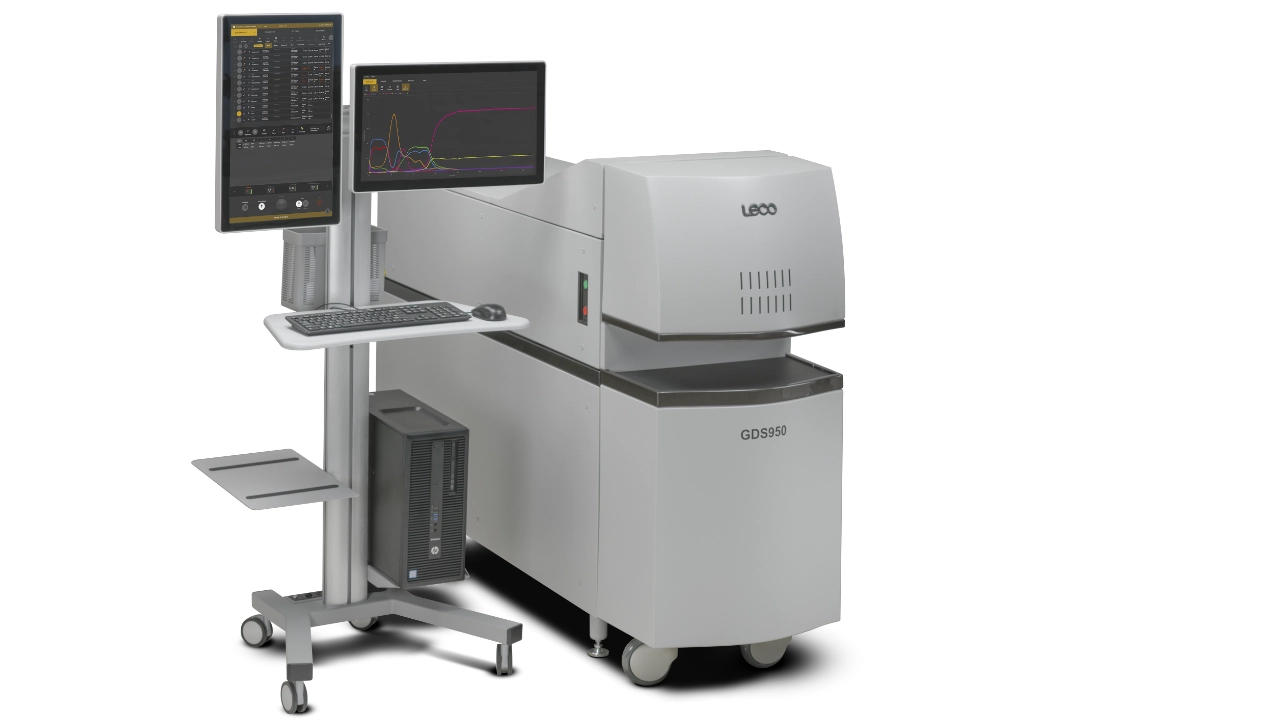
LECO GDS900 & GDS950 Spectrometers

L'introduction
The LECO GDS900 and GDS950 Glow Discharge Spectrometers deliver fast, accurate bulk and surface analysis for metals and coatings using advanced glow discharge technology and high-resolution CCD (charge-coupled device) detection. Both models provide reliable depth profiling and true bulk composition without the distortions of traditional spark Optical Emission Spectrometry (OES).
The GDS950 stands out with its dual Direct Current / Radio Frequency (DC/RF) source, enabling analysis of non-conductive materials like coatings, ceramics, and glass, along with enhanced versatility for complex layered samples. The GDS900 is an excellent choice for routine metals analysis, while the GDS950 is ideal for labs requiring broader application coverage and integrated surface-to-substrate profiling.
Why Choose LECO GDS Series
True Bulk Accuracy for Metals
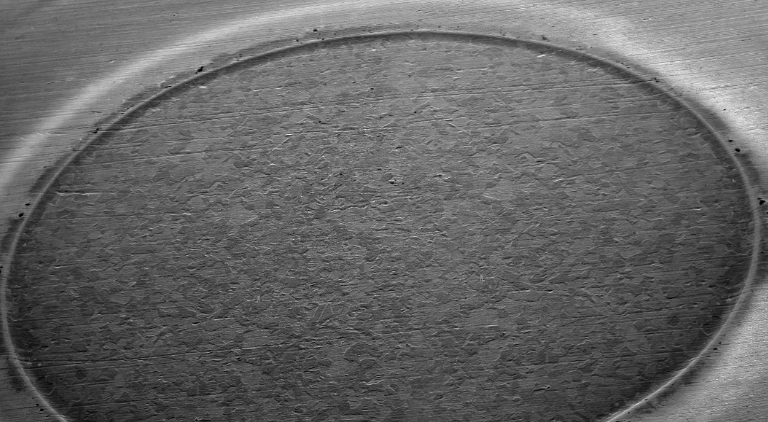
Both the GDS900 and GDS950 deliver precise bulk elemental analysis using glow discharge technology. By sputtering the sample surface rather than melting it, the instruments eliminate metallurgical history effects—ensuring results that truly represent the material.

Faster Setup, Cost-Efficient Ownership
Glow discharge produces clean, interference-free spectra, reducing the number of reference standards required. This means quicker calibration, less downtime, and lower consumable costs—keeping your lab efficient and profitable.
Analyze More, See More
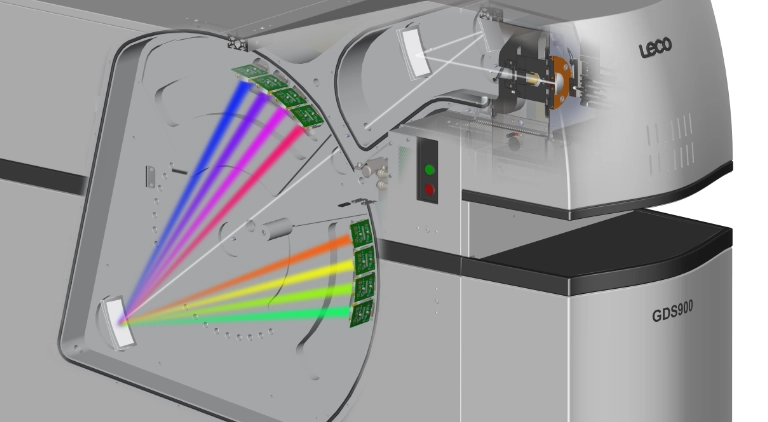
Advanced CCD detection provides full spectral coverage and real-time monitoring, giving you flexibility to select optimal lines and achieve superior accuracy across a wide range of elements, including complex alloys.
Unmatched Versatility
The dual-mode DC/RF lamp (GDS950) expands your capabilities beyond metals to non-conductive materials like coatings, glass, and ceramics. Switch modes in software—no hardware changes required—for effortless depth profiling and advanced surface analysis.
Instrument Applications
Core Analyses
Featured Application Notes

Compositional Depth Profile Analysis of Galvanized Steel
Compositional Depth Profile Analysis of Galvanized Steel
Bulk Analysis of a Plain Carbon Steel Sample, taken using an Immersion Sampling Probe
Bulk Analysis of a Plain Carbon Steel Sample, taken using an Immersion Sampling Probe

Bulk Analysis of Low Alloy, Cr-Mo, Free Machining, and Austenitic High Mn Steels
Bulk Analysis of Low Alloy, Cr-Mo, Free Machining, and Austenitic High Mn Steels

Bulk Analysis of Cast Iron
Bulk Analysis of Cast Iron
How Glow Discharge Spectrometers Work
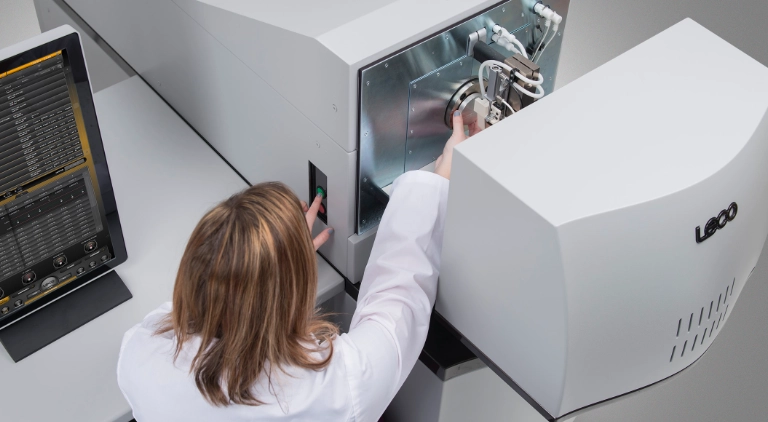
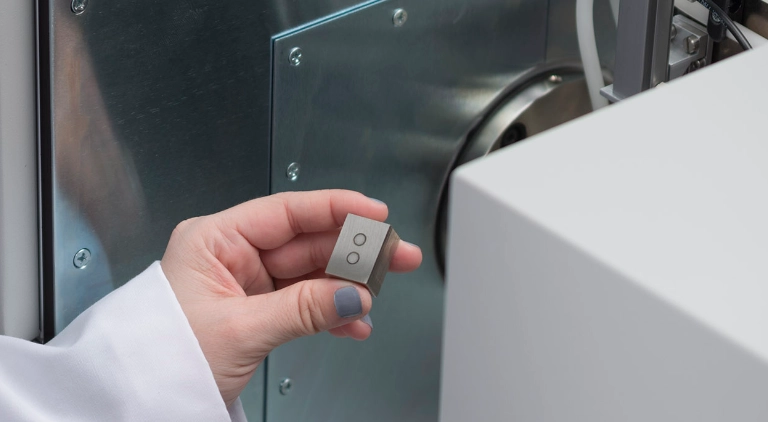
Glow Discharge Spectrometry (GDS) is a high-performance form of Optical Emission Spectroscopy (OES) used for the rapid elemental analysis of solid samples. The process begins by mounting a flat sample onto a glow discharge source. Once the source is evacuated and backfilled with argon, an electric field is applied to create a stable, self-sustained plasma.
Inside this plasma, argon ions are accelerated toward the sample surface. Through a process called cathodic sputtering, these ions eject surface atoms into the plasma, where they collide with energetic electrons and become electrically excited. As these atoms relax, they emit photons at unique wavelengths—the “spectrochemical signature” used in optical emission spectroscopy to identify specific elements.
A high-resolution spectrometer uses CCD arrays to record these OES signals. Because the light intensity is proportional to the concentration of the atoms, the system can precisely quantify the sample chemistry by calibrating known standards.
A primary advantage of GD-OES is its ability to generate a Compositional Depth Profile (CDP). By measuring the emission signals continuously as the plasma sputters deeper into the material, GDS uniquely validates the entire composition in a single run. This provides a detailed map of both external surface treatments (coatings) and the underlying internal “bulk” alloy, making it an essential tool for material validation.
Instrument Details
Specifications
Models
Model Comparison
Options
Applicable Methods
LECO Glow Discharge Spectrometers adhere to these approved methods.
- ASTM E2994 Analysis of Titanium and Titanium Alloys by Glow Discharge Atomic Emission Spectrometry
- ISO 19272 Low alloyed steel – Glow discharge optical emission spectrometry
- ISO 11505 General procedures for quantitative compositional depth profiling by glow discharge optical emission spectrometry
- ISO 14707 Glow discharge optical emission spectrometry (GD-OES)
- ISO 16962 Analysis of zinc- and/or aluminum-based metallic coatings by glow-discharge optical-emission spectrometry
- ISO 25138 Analysis of metal oxide films by glow discharge optical emission spectrometry
Instrument Support
Ensure reliable instrument performance with extensive support, training, and maintenance services. Need tailored support for your glow discharge spectrometers? Our experts are standing by.
Events
Webinars, Showcase, Conferences and Tradeshows



 English
  Spanish
  Japanese
  German
  French
  Portuguese