
Nitrogen Analysis & Testing

Nitrogen is a vital structural component in life sciences and a critical variable in industrial materials. Whether functioning as an intentional additive to harden alloys or a key metric for nutritional value in protein analysis, nitrogen is fundamental to material integrity.
Because nitrogen exists in both “life-based” organic compounds—such as proteins and urea—and “mineral” inorganic forms—such as dissolved gases in metals or nitrides—understanding its specific concentration is essential. Accurate measurement provides the precision necessary to ensure product safety, regulatory compliance, and process optimization across global manufacturing, agriculture, and life science sectors.
Why Measure Nitrogen in Materials?
Nitrogen plays a complex and often contradictory role in material performance, acting as an intentional strength-enhancer in some contexts and a deleterious contaminant in others. In metals, it can dictate ductility and weldability; in food and agriculture, it is the primary indicator of protein content and nutrient availability.
Because nitrogen can be difficult to isolate, precise analytical testing is required to distinguish between organic and inorganic forms. By quantifying these levels, engineers and scientists can ensure that materials meet specific performance requirements, structural standards, and nutritional benchmarks.
Nitrogen in Inorganic Materials

In inorganic materials—such as metals, alloys, and ceramics—nitrogen typically enters as an unwanted contaminant during melting or casting or is deliberately added to achieve specific metallurgical effects. Controlling these levels is essential to maintaining the structural and chemical integrity of the final product.
Why Test Nitrogen in Inorganic Materials?
- Quality Control: High-strength steels generally require nitrogen levels below 0.012% to prevent strain aging, while specific grades, such as resulfurized steels, require higher nitrogen content to increase machinability and weldability.
- Preventing Structural Failure: Excessive nitrogen can cause sudden fractures in formed parts and failed welds. Testing ensures that degassing methods have successfully reduced nitrogen below critical limits, particularly in applications like pipelines and structural steel where failure would be catastrophic.
- Manufacturing Efficiency: Nitrogen measurements provide real-time feedback; unexpected spikes often signal air leaks in the furnace or protective atmosphere failures, allowing operators to correct issues before producing defective material.
- Performance Specifications: Testing verifies formulation compliance for specialized materials, such as high-nitrogen stainless steels that require 0.1–0.4% nitrogen for corrosion resistance, and ceramics like silicon nitride that rely on precise nitrogen ratios for optimal electrical properties.
Nitrogen in Organic Materials

In the organic and life science sectors, nitrogen is an essential chemical building block found in compounds containing carbon, such as proteins, DNA, and urea. These organic forms are prevalent in food, feed, and biological matter, making nitrogen measurement the standard proxy for determining biological value and managing environmental impact.
Why Test Nitrogen in Organic Materials?
- Nutrition and Food Quality: Nitrogen content is the essential method for determining protein levels in foods and animal feeds. Accurate testing is critical for both mandatory regulatory labeling and cost-effective formulation, as protein is often the most expensive ingredient in feed.
- Agriculture and Soil Fertility: Because nitrogen is a limiting nutrient for plant growth, precise soil testing allows farmers to apply the correct amount of fertilizer. This practice ensures high yields while preventing excess nitrogen from leaching into groundwater.
- Environmental Monitoring: Tracking nitrogen compounds is vital to mitigating the risks of water pollution and eutrophication. Testing ensures that agricultural and industrial runoffs do not exceed environmental safety standards.
- Process Optimization: Industrial processes such as fermentation and composting rely on a specific carbon-to-nitrogen ratio. Testing ensures the right balance, which keeps the process efficient and minimizes the release of harmful emissions like ammonia or nitrous oxide.
Nitrogen Testing Instruments
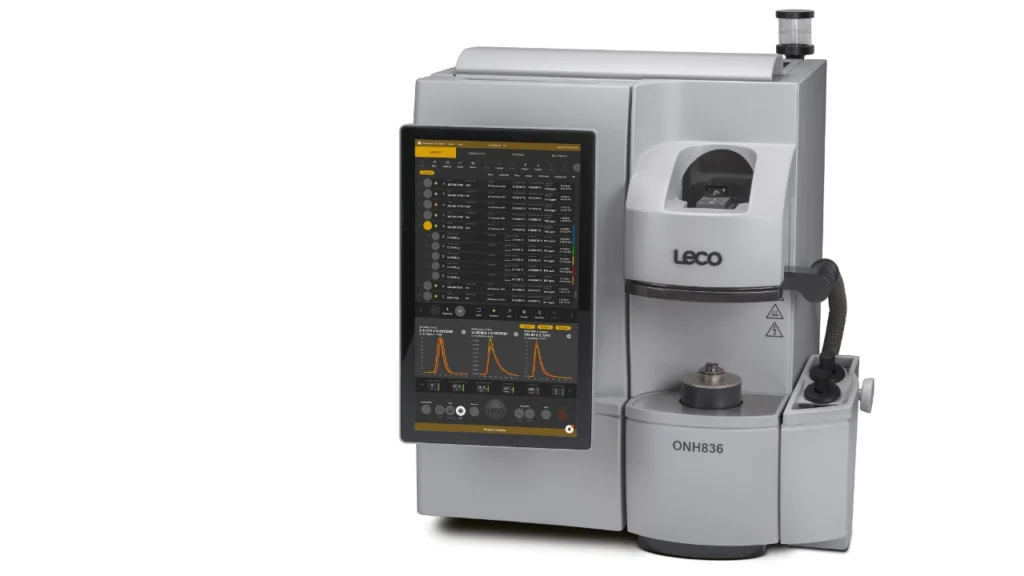
Testing nitrogen extends beyond simple compliance and serves as the basis for product quality and operational efficiency across industrial and biological sectors. Whether you’re guaranteeing the toughness of structural steel, verifying protein content for nutrition and feed formulation, or optimizing industrial fermentation processes, our instruments can help prevent material failures, ensure product quality, and drive process efficiency.

 English
  Spanish
  Japanese
  German
  French
  Portuguese